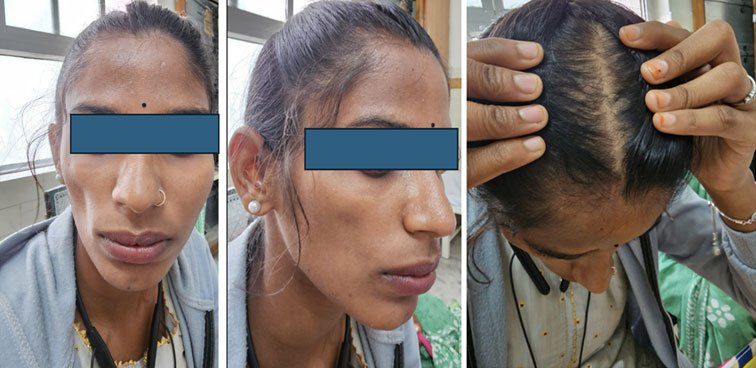
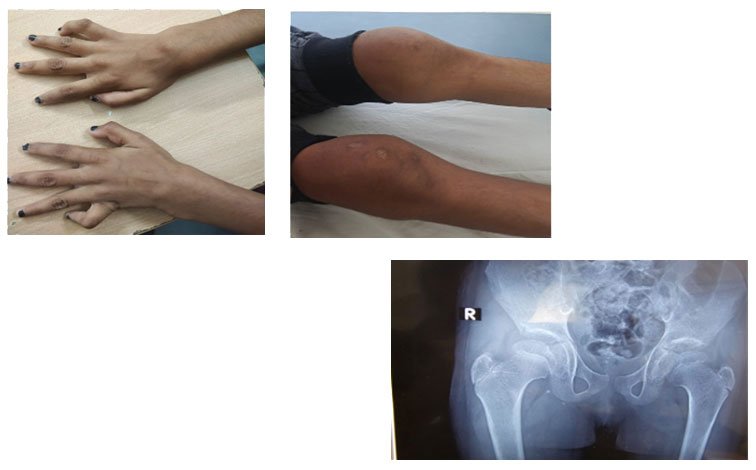
Answer Key:
Case 1 Answer : Based on the clinical presentation and progression of symptoms, a diagnosis of Parry-Romberg syndrome (PRS) was established. PRS is a rare and distinct form of localised scleroderma (morphea) characterised by progressive hemifacial atrophy, often accompanied by cutaneous, subcutaneous, and, at times, underlying tissue involvement.
Case 2 Answer : Genetic analysis identified a homozygous PRG4 c.619del (p.Arg207GlufsTer13) variant, confirming Camptodactyly–Arthropathy–Coxa Vara–Pericarditis (CACP) syndrome. This case explains the importance of distinguishing non-inflammatory arthropathy from JIA, especially in refractory cases with atypical pain.
Suggested Reading:
- Kuah CY, Koleva E, Gan JJL, Iqbal T. Parry-Romberg syndrome in a patient with scleroderma. BMJ Case Rep. 2018;2018:bcr2018226754.
- Singh S, Badiger VA, Balan S, et al. Thirteen Indians with camptodactyly-arthropathy-coxa vara-pericarditis syndrome. Clin Dysmorphol. 2024;33(4):152-159.